In a new home, set up storage in the order you feel the pain: the door where coats and boots land, then the primary closet, then the pantry, then the garage before the first snow. Live in the house for a few weeks and measure before you buy organizers, so you spend once.
Whether you just bought a 1920s house in the city or closed on a new build in Clarence or Wheatfield, the first year is when storage habits form. Here is a simple order of work.
The first week: the drop zone
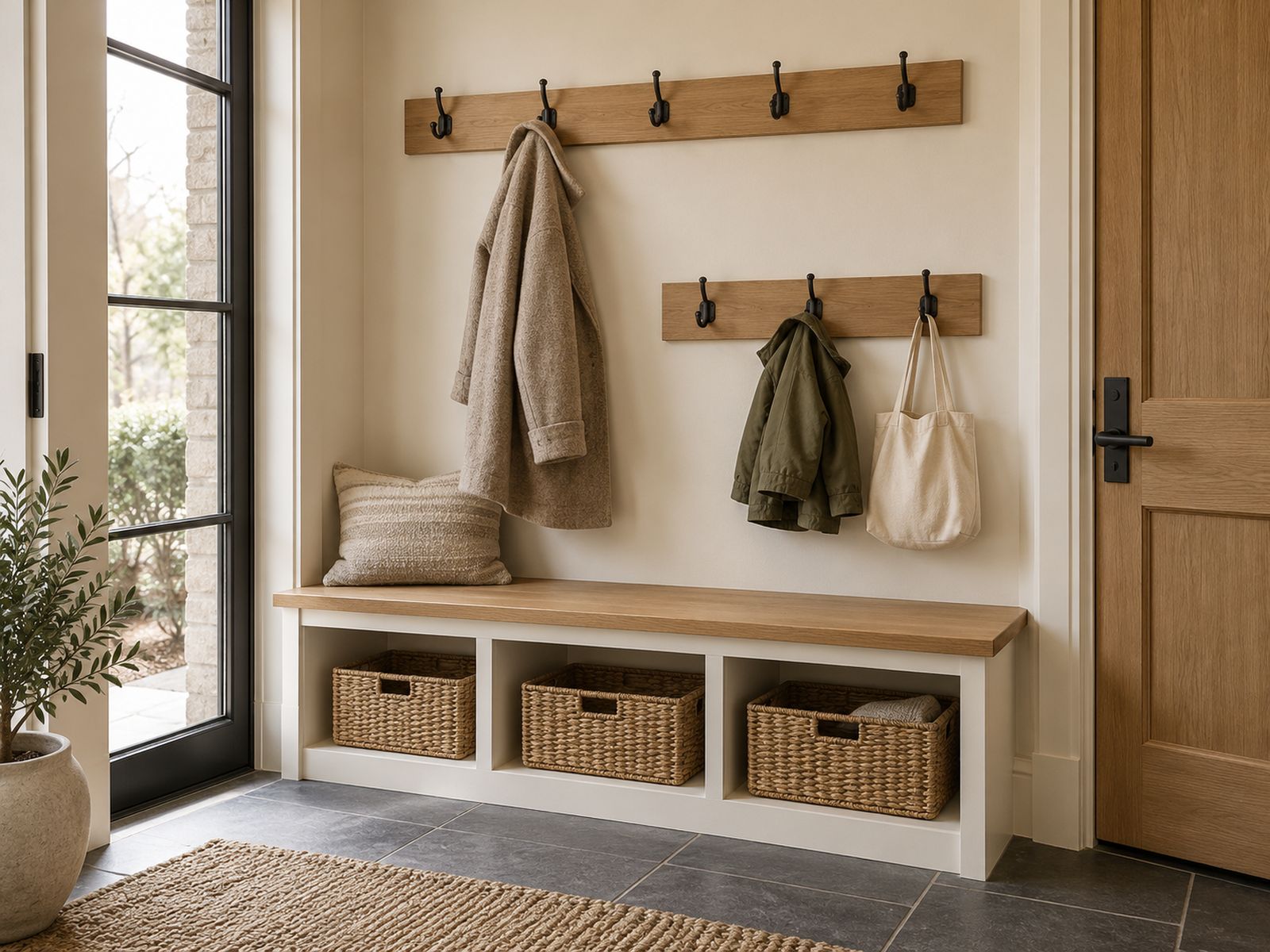
- Pick the door you actually use. In most Western New York homes that is the garage or side door, not the front door.
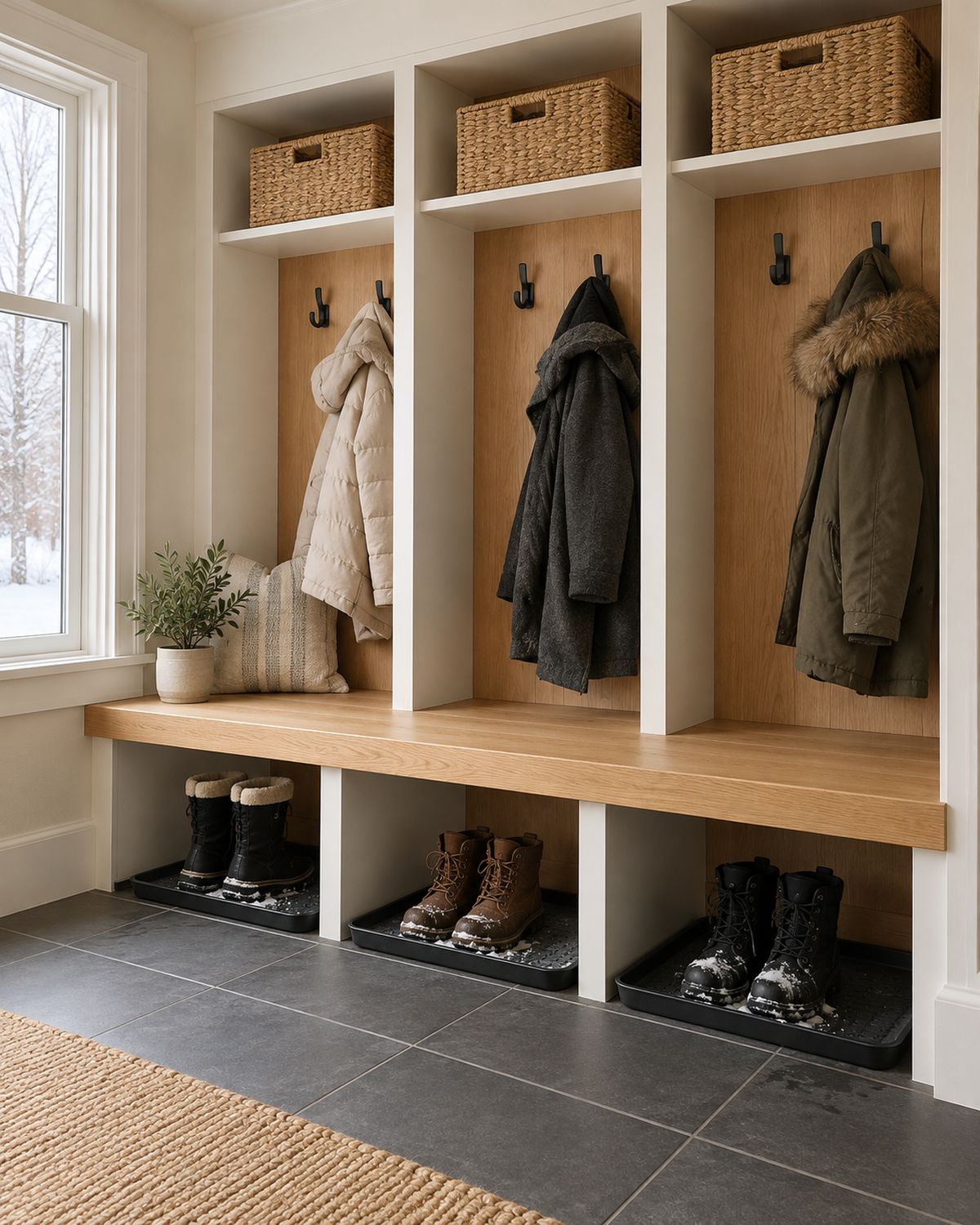
- Give everything that comes in a place to land: hooks at adult and kid height, a bench, a boot tray and one spot for keys and mail.
- Keep it open. Wet coats and boots dry faster on open hooks and lockers than behind doors. Our lake-effect mudroom guide has layouts.
The first month: live in it, then measure
- Write down what has no home. After a few weeks, the piles tell you where storage is missing.
- Measure each closet: width, depth, height, the door opening, and where the light switch, outlets and vents are. Take a photo of each wall.
- Hold off on bins and organizers until you have measurements. Most of what people buy in the first week ends up the wrong size.
Closets: deal with builder wire early
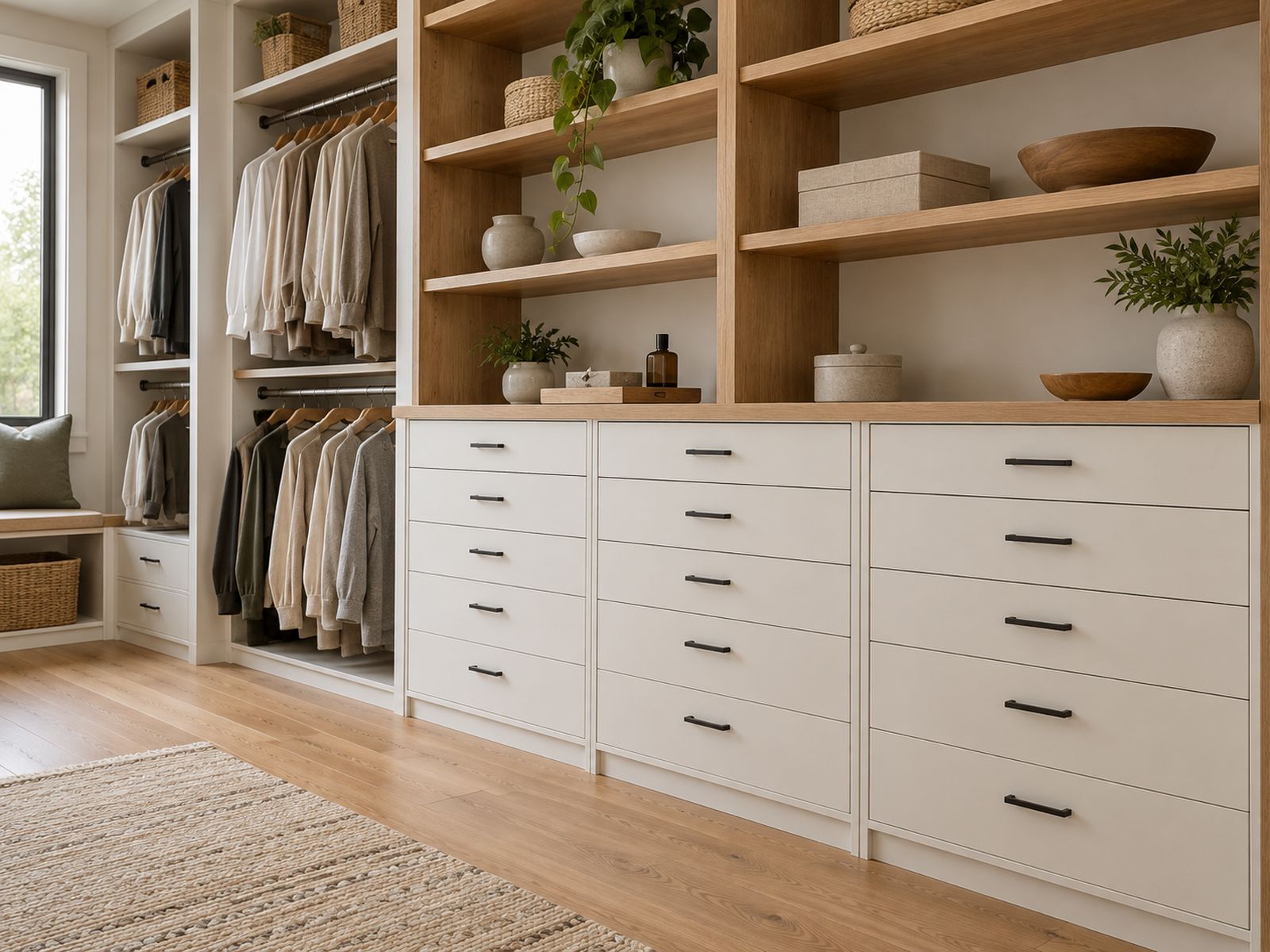
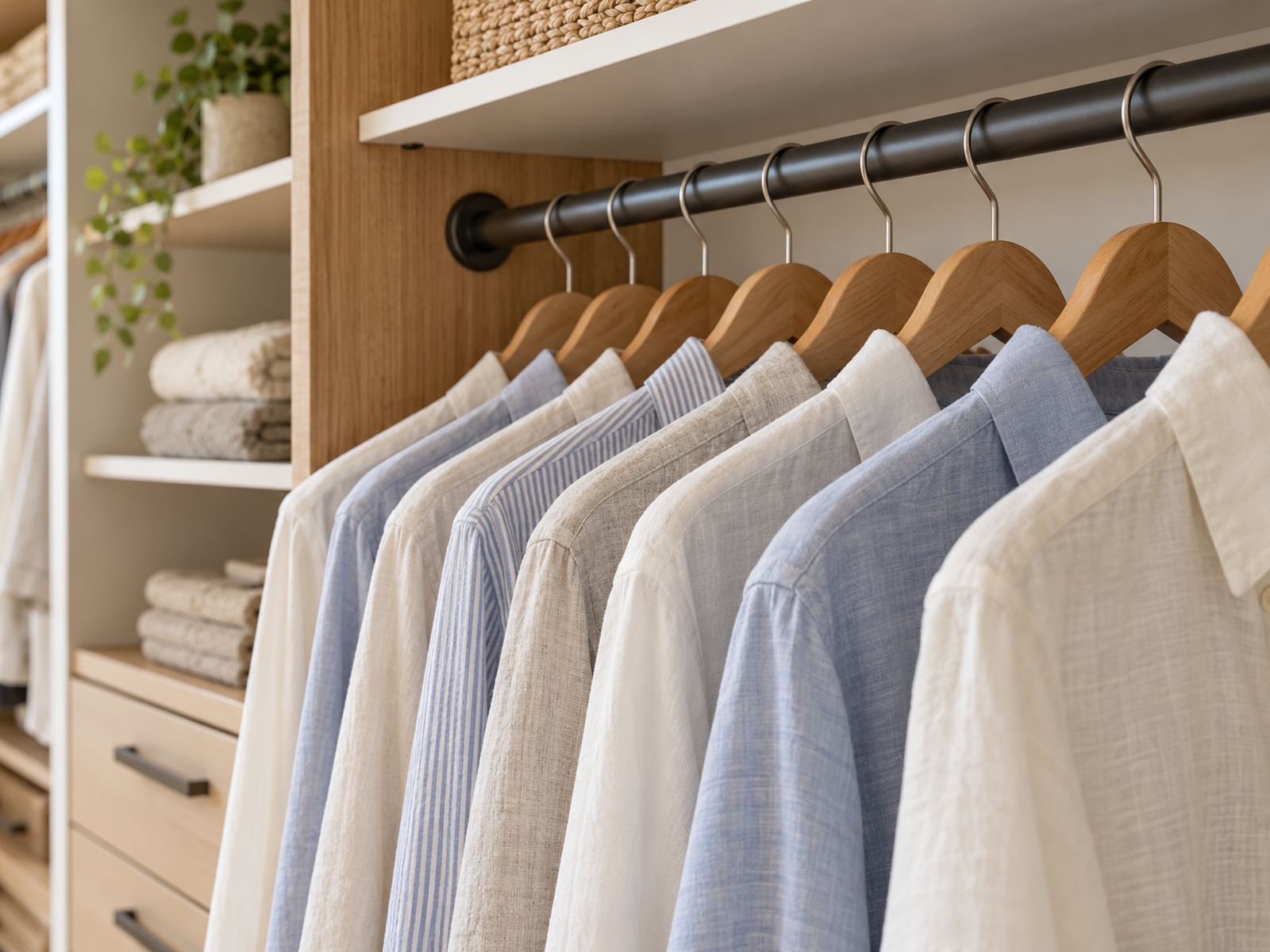
Many new and recently built homes come with one ring of wire shelving in every closet. It is much easier to replace before the closets fill up. Double-hang sections are the cheapest way to add capacity, and adjustable shelves suit kids’ closets that change every year. See replacing builder wire shelving.
Older homes: work with what is there
Older Buffalo-area houses tend to have shallow closets, plaster walls and sloped ceilings upstairs. Forward-facing rods, slim drawers and custom-depth shelves make them work. Our small-closet fixes cover the common problems.
Before winter: the garage
- Give shovels, salt and the snowblower a fixed spot near the door.
- Hang cabinets and racks off the floor so meltwater and salt can’t reach them.
- Put seasonal bins on overhead racks and keep the floor clear for the cars.
Pantry and linen closets
Unpack the kitchen by category, and give the pantry shelves that fit what you actually buy. Pull-outs and adjustable shelves help in deep reach-in pantries where things get lost at the back.
Text (716) 555-0100 a photo of the closet that bothers you most, or read what happens at a design visit. One visit can cover several rooms.