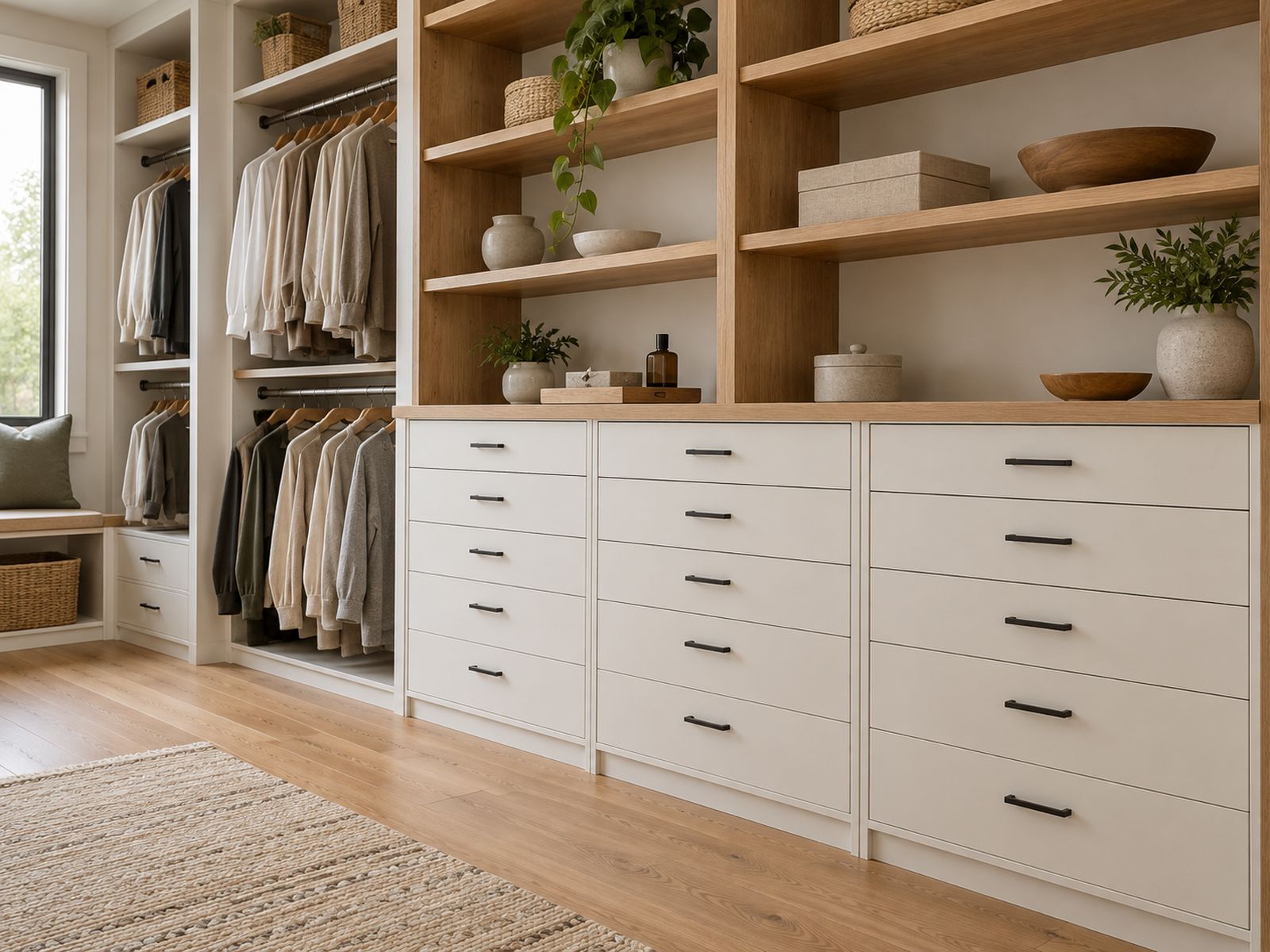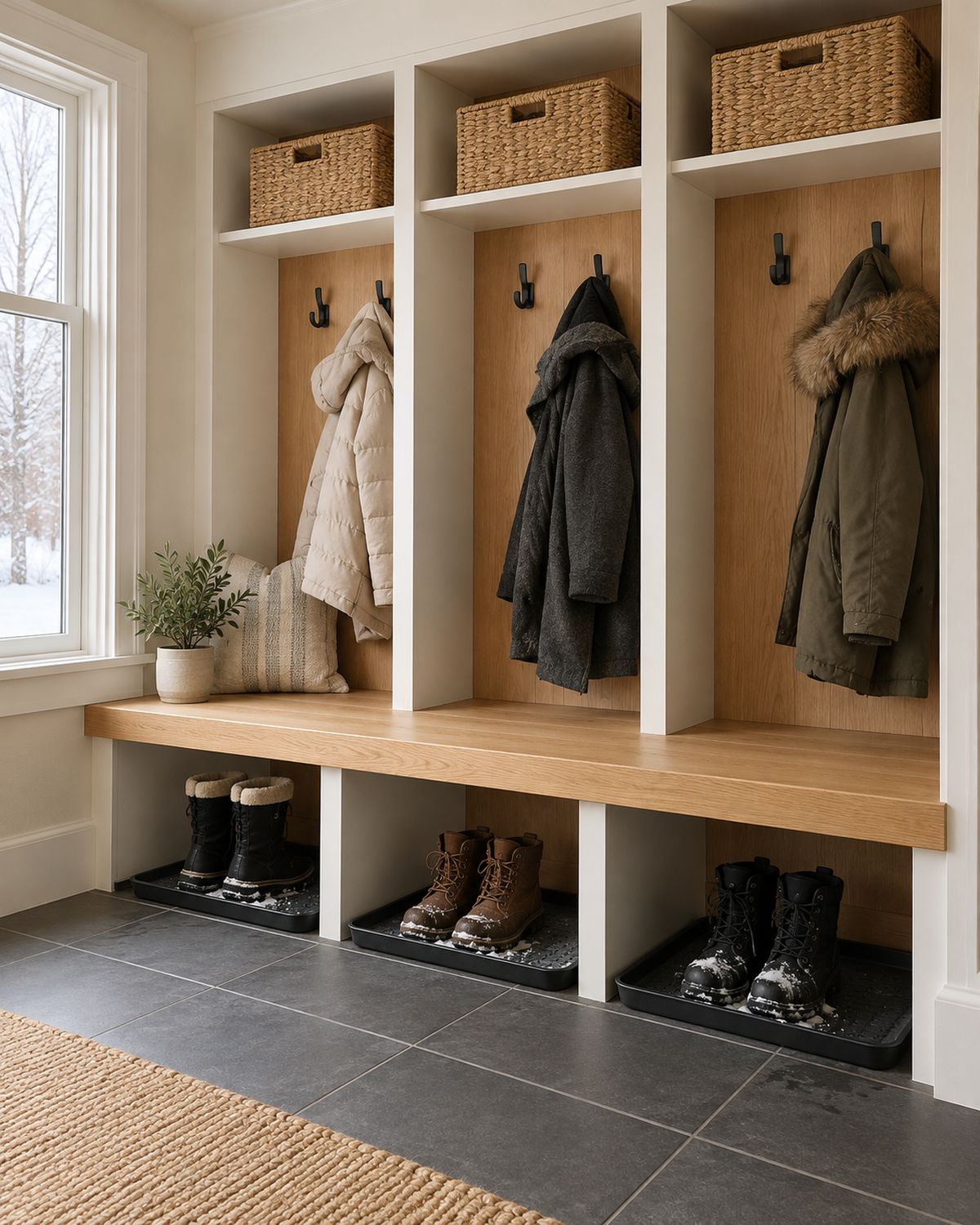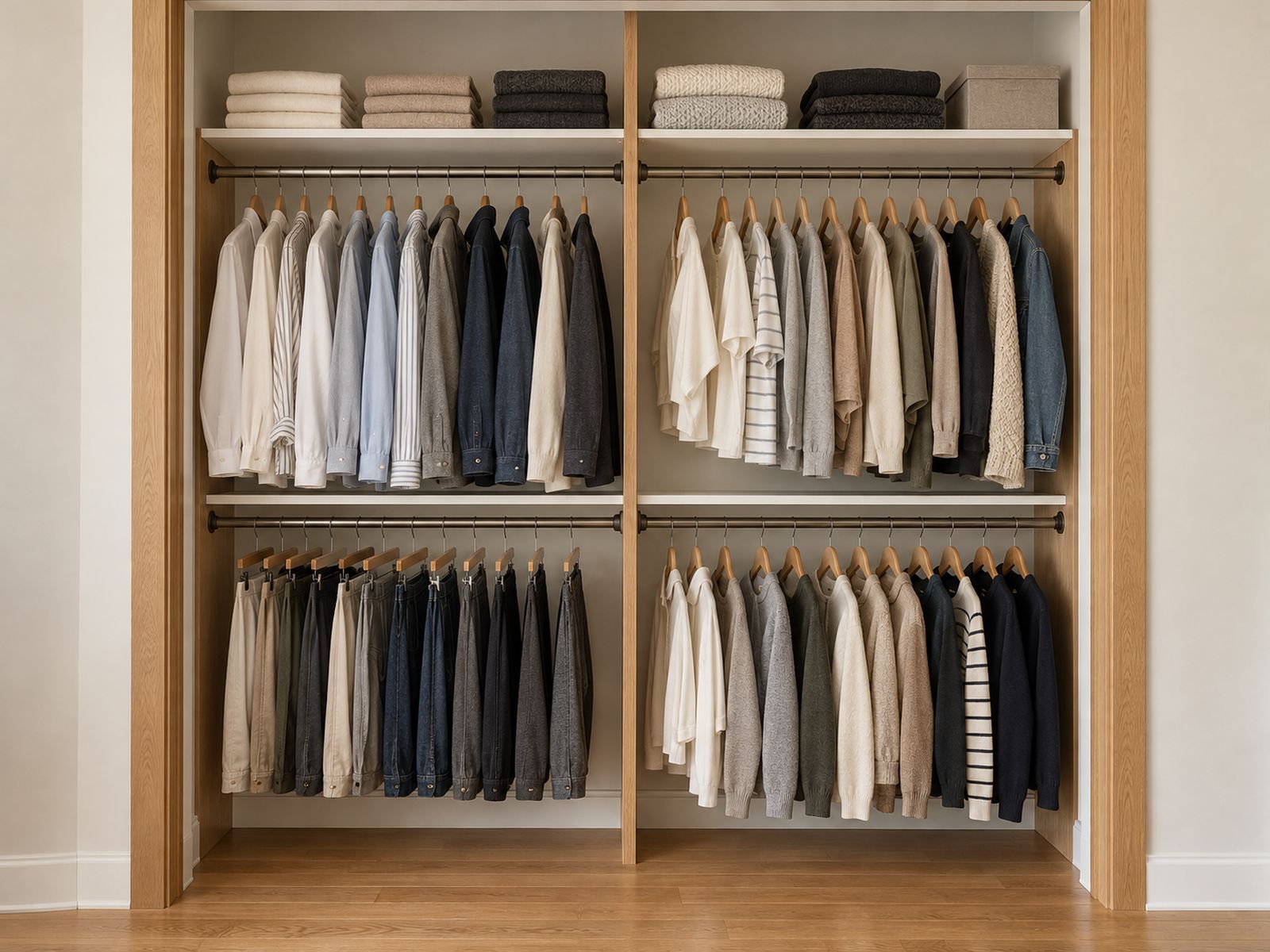
To get more out of a small closet in an older Buffalo home: switch to double-hang, cut shelves to the closet’s true depth, use forward-facing rods in shallow closets, add slim drawers below, use the space above the door, and design around sloped ceilings instead of ignoring them.
Kenmore became a village in 1899, and Buffalo’s housing stock is among the oldest of any big American city. Beautiful woodwork, solid plaster walls, and closets built for about a dozen outfits. Here are the fixes we use most.
1. Double the hanging
Most of what people hang is shirts and pants, which only need about 40 inches of height. Two rods stacked in that space nearly double hanging capacity. Keep one short section of long-hang for dresses and coats.
2. Cut shelves to the real depth
Older closets are often 18 to 22 inches deep instead of today’s 24. Off-the-shelf systems either stick out or leave gaps. Custom-cut shelves use every inch without blocking the door.
3. Use forward-facing rods in shallow closets
If a hanger won’t fit side to side, turn it. Pull-out or forward-facing rods hold clothes facing you, which works in closets as shallow as 12 to 14 inches.
4. Add slim drawers
A narrow drawer stack under short hanging replaces a dresser and frees up floor space in a small bedroom.
5. Use the space above the door
Most reach-ins have a foot or more of wall above the door opening. A high shelf there holds off-season bins and luggage.
6. Design around sloped ceilings
Upstairs bedrooms in capes and older homes often have knee walls and slopes. We place short-hang and shelves under the low side and long-hang where the ceiling is tallest.
7. Respect the plaster
Plaster and lath need different anchoring than drywall. We locate studs and use methods that won’t crack walls or damage original trim.
Custom reach-ins in Buffalo typically run $950 – $2,800 installed. See reach-in ideas or read about closets in Kenmore and Tonawanda.